Siding Contractor in Moore, OK Built for Hail, Wind & 100° Summers
Moore siding takes a beating that most of the country never sees. Spring hail cracks vinyl panels. Straight-line winds of 60–80 mph peel loose courses and soffit. July sun bakes the west walls until they fade and chalk, and red clay soil shifts the foundation enough to open up seams and trim joints. Moore Siding & Exteriors installs and repairs siding with those conditions in mind. We use impact-resistant vinyl, fiber cement and engineered wood, and we put them over proper house wrap and flashing, so the exterior holds up through the next storm season and the ones after it.
We're local, and most of our work is on the 1960s–1980s brick-and-siding ranches that make up so much of Moore, from Eastmoor and Kings Manor to the Southmoore and SW 149th corridor. We also handle the rebuilt neighborhoods where new panels have to match older ones. Our crews regularly work in Norman, south Oklahoma City, Newcastle, Del City and Valley Brook. We'll help you pick colors, document damage for your insurance claim and plan the project on a schedule you can see in writing.
- ✓Bonded and insured
- ✓Financing available
- ✓Serving homes within 20 miles of Moore
- ✓Insurance claim documentation support
- ✓Impact-resistant siding options installed over house wrap and flashing
- ✓Soffit, fascia, trim and gutter replacement
Request Your Free Estimate
No obligation. Fast, honest quotes.
Thank you — your request was sent!
A member of the Moore Siding & Exteriors team will reach out shortly. Need help now? Call (405) 468-9203.
Why Moore Homes Need Siding Built for Oklahoma Weather
Siding in Moore has to handle hail, tornado-force wind, triple-digit heat, ice storms and shifting clay soil, sometimes all in the same year. Your area's weather, the age of your home and the local rules all affect which material makes sense and how it should be installed.
Hail, Wind and Heat: Central Oklahoma's Climate
Moore is in the middle of Tornado Alley and in one of the most hail-prone metro areas in the U.S. Severe weather season peaks from April through June, and there's often a second round in the fall. Hail 1 to 2 inches across or larger shatters thin vinyl and dents aluminum and steel. The city has been hit by an F5 in 1999, an EF4 in 2003 and an EF5 in 2013, and ordinary thunderstorm gusts of 60–80+ mph unlock vinyl courses every year. Summer highs in the upper 90s and above 100°F make vinyl expand, so poorly nailed panels warp and "oil-can." In winter, events like the February 2021 arctic outbreak make cold vinyl brittle. Annual rainfall is in the mid-30s of inches and mostly comes in heavy, wind-driven downpours. That rain finds every gap in flashing it can.
Moore's Housing Stock: Ranches, Hardboard and Rebuilds
Most of Moore grew as an Oklahoma City bedroom suburb starting in the 1960s. That means a lot of single-story slab ranches with brick on the lower walls and wood, hardboard or vinyl on the gables and rear walls. Many homes from the 1980s and 1990s have Masonite-type hardboard lap siding, which swells and rots along the bottom edges once the paint fails. After the 1999, 2003 and 2013 tornadoes, entire areas around Plaza Towers, Briarwood and Kings Manor were rebuilt. Those neighborhoods now have 2000s–2010s homes standing next to older survivors, so color and profile matching is a common problem. In the inner-ring suburbs like Del City and Midwest City, you'll still find asbestos-cement shingles and old aluminum siding.
Permits, HOAs and Oklahoma Contractor Rules
The City of Moore requires building permits for most residing and sheathing replacement work, and its Building Inspections office inspects the job. Oklahoma uses the International Residential Code with state amendments, so siding has to meet the manufacturer's wind ratings and the code's weather barrier and flashing requirements. Norman, Oklahoma City and Midwest City each run their own permit process. Historic districts such as Heritage Hills, Mesta Park and Norman's Miller and Chautauqua districts require design review before you change exterior materials. Many HOAs in Southmoore, south OKC and Norman limit siding colors and set masonry percentages. Homes built before 1978 fall under EPA lead-safe rules. State law also protects homeowners: you get a 3-day right to cancel a home solicitation sale, and contractors can't pay or rebate your insurance deductible.
A Practical, Storm-Tested Community
Moore has roughly 60,000+ residents. Most own their homes, and a lot of them commute to OKC, Tinker AFB, OU or the FAA's Mike Monroney Center. Many families have lived through a tornado, so they care more about durability and storm resilience than trendy finishes. Insurance-funded siding projects are common here. So are storm chasers: after every big hail event, out-of-state crews show up, and local homeowners have good reason to be wary of them. Hiring a contractor who will still be around when the warranty question comes up two years later matters a lot in this market.
Common Siding Problems We See in Moore, OK
Most siding problems in Moore come from a handful of local causes: hail, wind, heat, aging hardboard and shifting clay soil. Here's what each one looks like, why it's so common here and how serious it usually is, so you know what you're dealing with before anyone hands you a quote.
Hail-Cracked and Punctured Vinyl Siding Serious
Hail fractures, holes or chips vinyl panels. The damage is usually worst on the side facing the storm. Older or thin-gauge vinyl breaks most easily, and cracked panels let rain get behind them and reach the house wrap and sheathing.
Why it's common hereMoore gets large hail almost every spring, mostly from April to June, and sometimes again in the fall. Lots of homes from the 1990s and early-2000s rebuilds were sided with builder-grade vinyl that has turned brittle after 20+ summers of strong UV. Cold snaps make it worse, because vinyl loses impact resistance as the temperature drops. Hailstones 1 to 2 inches across can wreck an entire west or north elevation in about ten minutes. Since vinyl colors get discontinued, patching often won't match.
Signs you'll notice- Spiderweb cracks or round holes in panels
- Chips missing from panel butt edges
- Fragments of vinyl in the grass after a storm
- Dented gutters, downspouts or AC fins nearby
- Damage concentrated on one or two elevations
- Granules or spatter marks on walls and windowsills
We see hail damage everywhere from Westmoore to Eastmoor. It's especially common on 1990s–2000s brick-and-vinyl homes near the SW 149th corridor and in the Plaza Towers and Briarwood rebuild areas, where the original builder-grade panels are now brittle.
Our fix: We document the damage with photos, meet with your adjuster and replace the affected panels. If the color has been discontinued, we replace the full elevation with impact-resistant or insulated vinyl or fiber cement so the house matches.
Wind-Torn Siding, Soffit and Fascia Emergency
Strong wind lifts siding courses until they unlock and blow off, and it pulls soffit panels and fascia loose at the eaves. Once that happens, the wall framing and attic are open to rain, birds and pests.
Why it's common hereIn central Oklahoma, thunderstorm gusts of 60–80+ mph happen every year even without a tornado. Moore is also on record for violent tornadoes in 1999, 2003 and 2013. Wind does the most damage at gable ends, corners and eaves. Older homes often have vinyl that was short-nailed or nailed too tight, plus aluminum soffit that was never fastened well. Missing pieces need fast attention because spring storms tend to come in clusters and the next round of wind-driven rain is usually only days away.
Signs you'll notice- Missing or flapping siding courses
- Soffit panels hanging or blown into the yard
- Fascia boards pulled away from rafter tails
- Exposed house wrap or bare sheathing
- Birds or wasps entering at the eaves
- Corner posts loose or detached
This damage is most common on gable ends and the rear walls of 1960s–1980s ranches in Old Town Moore and Kings Manor. Open acreage homes in Newcastle and Bridge Creek also take a lot of it because there's nothing nearby to break the wind.
Our fix: We dry-in exposed areas quickly. Then we reinstall or replace the siding with fasteners that meet the manufacturer's wind rating, and we replace damaged soffit and fascia with properly secured, vented materials.
Rotting Hardboard (Masonite-Type) Siding Serious
Composite hardboard lap siding absorbs water wherever the paint has failed. It swells, gets soft, delaminates and rots, usually starting at the bottom edges, at butt joints and around windows.
Why it's common hereMany homes built in Moore in the 1980s and 1990s used hardboard siding on the gables and rear walls. Heavy spring rain, sprinkler overspray and red clay splashing up from the ground soak the lower courses again and again, and summer heat breaks the paint down fast. Once moisture gets in, hardboard doesn't recover. Rot often spreads into the OSB sheathing and window framing, and you usually can't see that part until the siding comes off.
Signs you'll notice- Swollen, mushroomed bottom edges
- Soft spots that give under thumb pressure
- Peeling paint that won't stay bonded
- Wavy or bulging boards
- Rot around window and door trim
- Mushrooms or mold near the base of walls
We find hardboard failure all the time in Eastmoor, the Fairmoore and Brand Senior Center area and around Little River Park. In those neighborhoods, the original 1980s siding has been through 35+ Oklahoma summers.
Our fix: We tear off the hardboard, inspect the sheathing and replace anything rotted. Then we reside with fiber cement or LP SmartSide engineered wood over a new weather barrier and flashing.
Heat Warping and Oil-Canning in Vinyl Moderate
Vinyl siding expands and contracts with temperature. If it's nailed too tight or doesn't have expansion gaps, it can't move freely, so it buckles, ripples or bows into a wavy "oil-can" look across the wall.
Why it's common hereSummer temperatures in Moore regularly reach the upper 90s and go past 100°F, and south and west walls can get much hotter than the air. Low-E windows reflecting sunlight onto neighboring houses add even more heat. Rushed installations, which are common after storms when crews are stretched thin, tend to skip proper nail spacing and expansion allowances. Thin-gauge vinyl doesn't stay stiff enough to resist warping.
Signs you'll notice- Visible ripples or waves across long walls
- Panels bowing out between nails
- Buckling near corners and J-channel
- Panels that won't slide when pushed
- Distorted spots facing a neighbor's windows
We see this most on the west and south walls of newer two-story homes in Southmoore and south OKC between SW 104th and SW 134th. It's often on vinyl that was installed quickly after a hail claim.
Our fix: We remove and rehang the panels with correct nailing and expansion gaps. If the panels are already distorted, we replace them with thicker or insulated vinyl that resists heat.
Foundation-Movement Gaps and Cracked Trim Moderate
When the foundation moves, siding seams pull apart, trim joints and corners crack, and brick veneer develops stair-step cracks. These gaps let water and pests in at the transitions between materials.
Why it's common hereMoore sits on red clay soil that swells when it's wet and shrinks during drought. Slab foundations rise and settle with the seasons, and the walls move with them. When siding is rigidly caulked or butted tight against brick, it ends up absorbing that movement and tearing apart. That's why brick-to-siding transitions on Moore ranches are such frequent leak points.
Signs you'll notice- Stair-step cracks in brick veneer
- Separated siding seams or butt joints
- Split caulk at brick-to-siding transitions
- Trim boards cracked at miters
- Doors or windows sticking seasonally
- Gaps at corner posts
This shows up throughout the 1970s slab ranches in Kings Manor, Eastmoor and Old Town Moore, and on older homes in Del City and Midwest City near Tinker AFB.
Our fix: We re-flash the transitions, use trim details and flexible sealants that allow for movement and replace cracked trim. If the movement looks significant, we'll tell you when a foundation specialist should take a look first.
Asbestos-Cement Shingle Siding Serious
Many homes from the 1940s through the 1960s were sided with rigid cement shingles that may contain asbestos. They're stable as long as they're intact, but cracking, drilling or careless removal can release fibers.
Why it's common herePost-war neighborhoods in Del City, Midwest City, Spencer, Warr Acres and Bethany were built when asbestos-cement siding was standard. A lot of those homes were later covered with aluminum or vinyl, so the old shingles are often hidden underneath until a hailstorm or remodel exposes them. Hail and wind also break the brittle shingles. The material needs testing and proper handling, and a crew that just starts tearing it off can put your family at risk.
Signs you'll notice- Rigid, gray-white shingles with a pebbled or striated texture
- Cracked or broken corners
- Nail holes along the bottom edge of each shingle
- Older shingles visible behind loose aluminum
- Home built before about 1980
We find this most often in the inner-ring OKC suburbs: Del City, Midwest City, Spencer, Warr Acres and Bethany, usually on 1950s minimal-traditional homes.
Our fix: We arrange testing first. Removal is coordinated with properly licensed abatement professionals when required, and then we reside the home with modern fiber cement or vinyl.
Red Dust Staining and Sun Fading Minor
Over time, siding turns chalky and faded, and red-orange stains build up on the lower courses. It's mostly a cosmetic problem, but heavy chalking means the surface is breaking down.
Why it's common hereStrong Oklahoma UV fades vinyl and paint on south and west walls first. Gusty south winds blow red dust onto light-colored siding, and sprinklers and rain splash clay up onto the bottom few courses. Older vinyl from the 1990s fades unevenly, which makes any later repair stand out.
Signs you'll notice- Chalky residue when you rub the siding
- Noticeably lighter color on sunny walls
- Orange-red staining on bottom courses
- Patched panels that don't match
- Dull, porous-looking surface
This is common on beige and white vinyl throughout Westmoore and the Little River Park area. Newcastle and Goldsby acreage homes near open, dusty fields also get it badly.
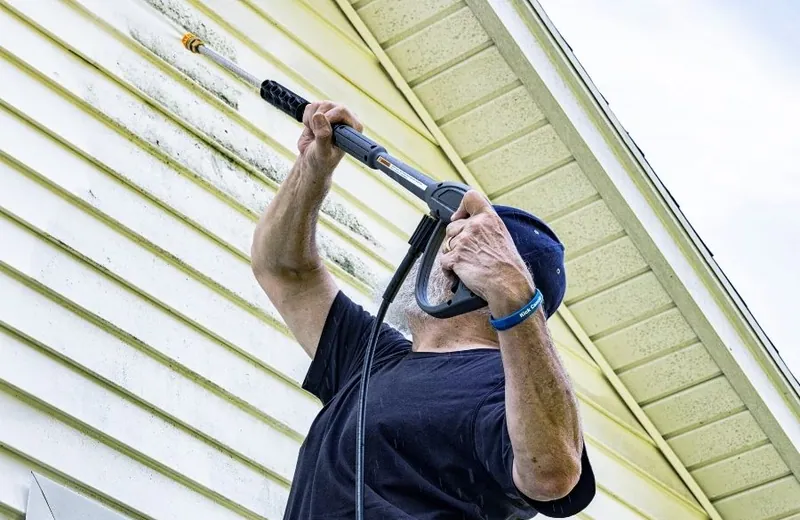
Our fix: Cleaning restores lightly stained siding. If panels are badly faded, we recommend fade-resistant colors or painted fiber cement, and we can adjust grading and sprinkler spray to cut down on splashback.
Siding Services for Moore and the OKC Metro
We install and repair everything from budget-friendly vinyl to premium cedar and stone veneer. Every recommendation is based on the same questions: how well does it handle hail and wind, how does it hold up in Oklahoma heat, will your HOA approve it and does it fit your budget. Here's what we offer and where each option makes sense.
Siding Replacement & Hail Damage Restoration ⭐ Specialty
We replace hail- and wind-damaged siding, whether that's a few panels, one elevation or the whole house. We document the damage for your insurance claim and solve matching problems when the original color has been discontinued.
Our approachWe do a full tear-off, inspect the sheathing, replace rot, install new house wrap and flash windows, doors and brick transitions. Fasteners and spacing follow the manufacturer's wind ratings and IRC requirements.
In Moore, OKThis is our most common job in Moore. After the spring hail season, we help homeowners in Briarwood, Plaza Towers and Southmoore meet with adjusters. We stay within Oklahoma's rules, so we never waive deductibles and never act as a public adjuster.
Best for: Homeowners with an open hail or wind claim, mismatched rebuild exteriors or siding at the end of its life.
Fiber Cement, James Hardie, Hardie Plank & Hardie Board Installation ⭐ Specialty
We install James Hardie lap siding (Hardie Plank), panels and Hardie Board trim, plus other fiber cement products. Fiber cement doesn't burn, rot or get eaten by insects, and it holds up well against hail.
Our approachWe follow the manufacturer's clearances and gapping, flash every butt joint and use corrosion-resistant fasteners. We protect cut ends and keep ground and roof clearances that help stop clay splashback damage.
In Moore, OKFiber cement is the standard on many newer Norman and south OKC homes, and it's a strong replacement for failed hardboard on 1980s Moore ranches. It also handles 100°F summers without warping.
Best for: Long-term owners who want storm durability, low maintenance and a painted-wood look.
Vinyl Siding Installation
We install standard, thick-gauge and insulated vinyl siding in lap, Dutch lap and shake profiles, with color options picked to resist fading.
Our approachWe hang panels loose with correct nail spacing and expansion gaps so they don't oil-can. Insulated vinyl adds a contoured foam backer for stiffness and better impact resistance.
In Moore, OKInsulated vinyl stands up to Moore hail better than builder-grade panels and helps with cooling costs during triple-digit summers.
Best for: Value-conscious homeowners, rental owners and insurance replacements on brick-and-vinyl homes.
Engineered Wood Siding Installation
We install LP SmartSide and similar engineered wood lap, panel and trim products, which give you real wood texture with treated, impact-resistant strands.
Our approachWe prime and seal cut edges, keep the required clearances and install over a fully flashed weather barrier.
In Moore, OKIt's a popular choice for acreage homes and shops in Newcastle and Goldsby, and it's lighter and quicker to install than fiber cement.
Best for: Homeowners who want a wood look with strong hail resistance at a mid-range price.
Board and Batten, Vertical & Modern Siding Installation
We install board and batten exteriors, vertical panel siding and modern mixed-material designs in fiber cement, engineered wood, vinyl or metal.
Our approachVertical systems need furring or blocking, careful flashing at horizontal breaks and well-planned batten layout to keep water out.
In Moore, OKThis is a popular way to update gables on Moore ranches and give new builds a modern-farmhouse look in Norman and Mustang.
Best for: Curb-appeal updates, accent gables and contemporary designs.
Wood, Cedar & Cedar Shake Siding Installation
We install natural wood lap siding, cedar bevel siding and cedar shake, and we replace sections to match original wood on older homes.
Our approachWe use back-primed boards, stainless or hot-dipped fasteners, a rainscreen gap where it's appropriate and finish coats suited to Oklahoma's UV.
In Moore, OKThese are best suited to Nichols Hills custom homes and historic-district projects where design review prefers natural materials.
Best for: Upscale and historic homes where authenticity matters most.
Metal & Aluminum Siding Installation
We install steel and aluminum siding, and we repair or replace aging aluminum siding on post-war homes.
Our approachSteel panels need the correct gauge, concealed fasteners and trim details that let them expand and contract.
In Moore, OKSteel is a good fit for shops, outbuildings and acreage homes in Bridge Creek and Noble. We also replace dented aluminum on homes in Del City and Midwest City.
Best for: Outbuildings, rural properties and owners who want the toughest possible skin.
Stone Veneer Siding Installation
We install manufactured stone veneer for wainscots, columns, entries and accent walls.
Our approachWe use a two-layer weather barrier, lath, scratch coat and weep screed so the veneer drains properly.
In Moore, OKStone veneer helps meet HOA masonry-percentage requirements in newer Moore and Norman subdivisions, and it stands up to hail at the base of the wall.
Best for: HOA compliance, curb appeal and durable lower-wall protection.
Soffit, Fascia & Exterior Trim Installation
We replace wind-torn soffit, rotted fascia and cracked trim, and we offer gutter replacement as well.
Our approachWe use vented soffit for attic airflow, aluminum or fiber cement fascia and trim details that allow for foundation movement.
In Moore, OKWind damage at the eaves is one of the most common storm repairs in Moore.
Best for: Storm damage, rotted eaves and full exterior refreshes.
Siding Repair Services
We replace individual panels, fix loose courses, repair rot and re-seal transitions.
Our approachWe source matching profiles where they're available and tell you honestly when a patch won't blend in.
In Moore, OKThis is ideal for minor wind damage or isolated hardboard rot on Moore ranches.
Best for: Localized damage on siding that otherwise has life left.
Siding Inspection and Consultation
We do a full exterior assessment after storms or before you buy or sell a home.
Our approachEvery assessment includes photos, moisture checks and a written summary of what we found.
In Moore, OKIt's especially useful after hail when you're not sure whether a claim is worth filing.
Best for: Post-storm decisions, home purchases and planning.
Asbestos Siding Removal and Replacement
We manage the full project of replacing asbestos-cement shingle siding.
Our approachThe material is tested first. Removal is coordinated with properly licensed abatement professionals when required, then we reside.
In Moore, OKThis is common in post-war Del City, Spencer and Warr Acres homes.
Best for: 1940s–1960s homes with original cement shingles.
Mobile Home & Commercial Siding Installation
We replace manufactured-home siding and side small commercial buildings, multifamily units and rentals.
Our approachWe use materials and fastening suited to each structure type and schedule work around tenants and business hours.
In Moore, OKWe serve manufactured homes in Nicoma Park and Goldsby and storefronts along the I-35 corridor.
Best for: Manufactured homes, landlords and small commercial owners.
Our Siding Process, Start to Finish
You'll know what's happening at every stage: what we found, what the project costs, when crews arrive and what the inspector needs to see. Here's how a typical Moore siding project runs.
Inspection & Damage Documentation
- Walk every elevation, including gables, soffit, fascia and transitions
- Photograph hail strikes, wind damage and rot
- Check for soft sheathing and failed flashing
- Explain whether the damage looks worth an insurance claim
Local note: After a major hail event, inspection requests spike. Calling early in the season puts you ahead of the backlog.
Estimate, Insurance Coordination & Material Selection
- Provide a line-item written estimate
- Meet your adjuster on site if you'd like
- Help you choose materials and colors, and check HOA restrictions
- Review financing options if needed
Local note: We follow Oklahoma law. That means no deductible rebates, no acting as your public adjuster and a 3-day right to cancel.
Permits & Ordering
- Pull permits with Moore, Norman, OKC or the applicable city
- Submit for historic design review if required
- Order materials and confirm color lots match
- Give you a written start date
Local note: Homes built before 1978 get lead-safe planning, and suspected asbestos is tested before any work starts.
Tear-Off & Installation
- Remove old siding and protect landscaping and windows
- Replace rotted sheathing (we'll show you before we bill for it)
- Install house wrap and flashing, then siding, trim and soffit
- Clean up the site and run a magnet sweep for nails every day
Local note: In May and June we plan around storms and dry in each wall the same day we open it.
Final Walkthrough & Inspection
- Walk the finished exterior with you
- Address any punch-list items
- Coordinate the final city inspection
- Provide project photos and documentation for your insurer
Why Moore Homeowners Choose Moore Siding & Exteriors
We Live Here, and We'll Be Here After the Storm Chasers Leave
Every spring, hail brings out-of-state crews into the Moore area, and a lot of them are gone by July. We're a local siding contractor, and our name is literally the town we work in. We know which neighborhoods were rebuilt after 2013, which subdivisions have strict HOAs and which streets in Eastmoor are full of aging hardboard. When you have a question a year after the job, you'll be calling a local number and talking to someone who actually saw your house.
Bonded and Insured on Every Job
Siding work means ladders, scaffolds, tear-off and heavy materials, so you want your contractor carrying the risk instead of you. Moore Siding & Exteriors is bonded and insured, and we're glad to show proof before we start. We also pull the required permits with the City of Moore or whichever city has jurisdiction over your home, so the work is inspected and on record. That matters when you sell the house or file your next insurance claim.
Materials Chosen for Hail, Wind and Heat
Not every siding product survives Oklahoma. Thin builder-grade vinyl cracks in hail and warps in 100°F heat. We'll explain the tradeoffs between thicker or insulated vinyl, fiber cement, LP SmartSide engineered wood and steel in plain terms: cost, impact resistance, upkeep and what your HOA will approve. Then we install over proper house wrap and flashing, because a durable panel doesn't do much good if water gets behind it.
Real Help With Your Insurance Claim
Insurance pays for a big share of Moore siding work, but the claim process can be confusing. We photograph and document the damage, meet your adjuster on site if you want us there and explain why matching matters when your color has been discontinued. We also stay within Oklahoma's rules. We don't waive or rebate deductibles, and we don't pose as a public adjuster. We just give you clear documentation so the claim reflects the actual damage.
Clear Estimates and Written Timelines
You'll get a written, line-item estimate that spells out materials, labor, trim, soffit and disposal. Since failed hardboard often hides rotted sheathing, we explain up front how hidden damage will be handled and priced, and we show you photos before any extra work is billed. You'll also get a written project schedule, which helps a lot during the May–June backlog when every crew in the metro is stretched.
Installation Details That Fit Moore's Conditions
Moore's clay soil moves, its wind is relentless and its heat expands vinyl. We plan for all three. We leave expansion gaps, use wind-rated nailing, build flexible brick-to-siding transitions and trim details that tolerate seasonal movement, and keep ground clearances that cut down red-clay splashback. These are the details rushed storm crews skip, and they're usually why siding fails early around here.
Financing and Full-Exterior Coverage
Financing is available, so you don't have to put off fixing failing siding until next storm season. And because we handle soffit, fascia, exterior trim and gutter replacement along with the siding, you have one crew and one schedule for the whole exterior. That's especially helpful after a storm that damaged several parts of the house at once.
A Local Siding Contractor You Can Verify
Bonded • Insured
Siding Service Areas Around Moore, OK
We serve homes within roughly 20 miles of Moore, from Norman's college neighborhoods to the post-war suburbs around Tinker AFB and the acreage properties west toward Newcastle and Bridge Creek. Each community has its own housing stock and permit office, and we know how each one works.
Moore, Norman & the South Metro
East Metro & Tinker Corridor
Oklahoma City & North/West Metro
We serve a 20-mile radius around Moore. If you're near the edge, such as Mustang, Nicoma Park or Spencer, call to confirm scheduling. We'll tell you up front whether we can serve your address. Not sure if we cover your area? Call (405) 468-9203.
How Much Does Siding Cost in Moore, OK?
Siding costs in Moore depend mostly on the material, how much wall area is actually sided (many ranches are part brick) and what turns up under the old siding. The ranges below are realistic for the Moore and OKC metro market. Your written estimate will be specific to your home.
Siding Material Primary Factor
Material choice drives most of the price. Standard vinyl typically runs around $4–$8 per square foot installed, and insulated or thick-gauge vinyl costs more. Engineered wood usually falls around $7–$12, fiber cement such as James Hardie around $8–$14, and natural cedar or stone veneer can go higher. In hail country, spending a little more on impact resistance often pays off by avoiding repeat repairs.
Wall Area and Brick Coverage Primary Factor
Many Moore ranches have brick on the front and lower walls, so the area that actually needs siding may be just the gables, upper walls and rear elevation. That can be under 1,000 square feet. A fully sided two-story in Southmoore or Norman might need 2,000+ square feet. Gables, dormers and lots of corners add labor and trim, so complicated layouts cost more per foot.
Hidden Rot and Sheathing Repair Secondary Factor
Failed hardboard siding often hides rotted OSB sheathing and window framing. You can't price that exactly until the old siding comes off. Sheathing replacement commonly adds a few dollars per square foot wherever it's needed. We spell out the unit price in the estimate and show you photos before charging for it, so the cost never comes as a surprise.
Old Siding Removal and Special Handling Secondary Factor
Tearing off a single layer of vinyl is simple. Removing layered siding, aluminum over wood or asbestos-cement shingles takes more time and disposal. Asbestos testing and licensed abatement add real cost, and so do lead-safe practices on homes built before 1978. Budget for these if your home was built before about 1980.
Trim, Soffit, Fascia and Permits Additional Factor
Replacing wind-damaged soffit and fascia, upgrading trim to fiber cement or adding gutters will raise the total. Permit fees vary by city but are usually a small part of the budget. HOA or historic-district requirements can narrow your material choices and affect the price.
| Typical project | Details | Estimated range |
|---|---|---|
| Hail repair on one elevation | Replace cracked vinyl on the west wall of a Westmoore brick-and-vinyl home, roughly 300–400 sq ft, with matching or close-match panels | $1,800 – $4,500 |
| Vinyl replacement on a 1970s brick ranch | Gables, rear wall and soffit on a single-story Kings Manor ranch, roughly 900–1,200 sq ft of siding, insulated vinyl | $8,000 – $15,000 |
| Hardboard tear-off to fiber cement | Full residing of an Eastmoor-area home with rotted Masonite, about 1,500–1,800 sq ft, including some sheathing repair and new trim | $17,000 – $30,000 |
| Soffit, fascia and trim refresh | Wind-damaged eaves on a typical Moore ranch, vented aluminum soffit and wrapped or fiber cement fascia | $3,000 – $8,000 |
Financing is available for siding replacement and repair projects. Ask about it during your estimate so you can compare monthly options alongside your insurance payout. New siding is one of the most visible exterior upgrades. Impact-resistant products and proper flashing reduce repeat storm repairs and moisture damage, and insulated options can make 100°F summers easier on your energy bill.
Recent siding Projects in Moore, OK
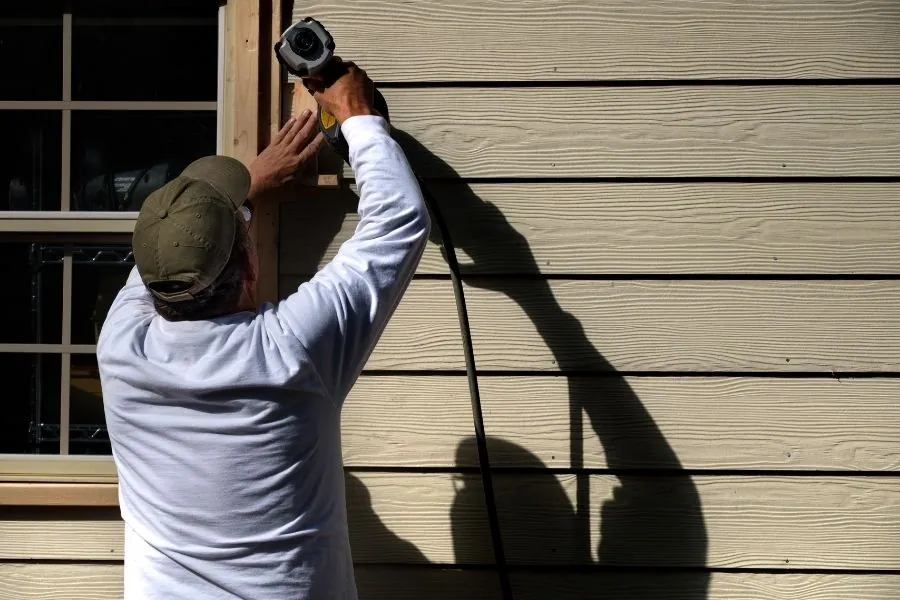
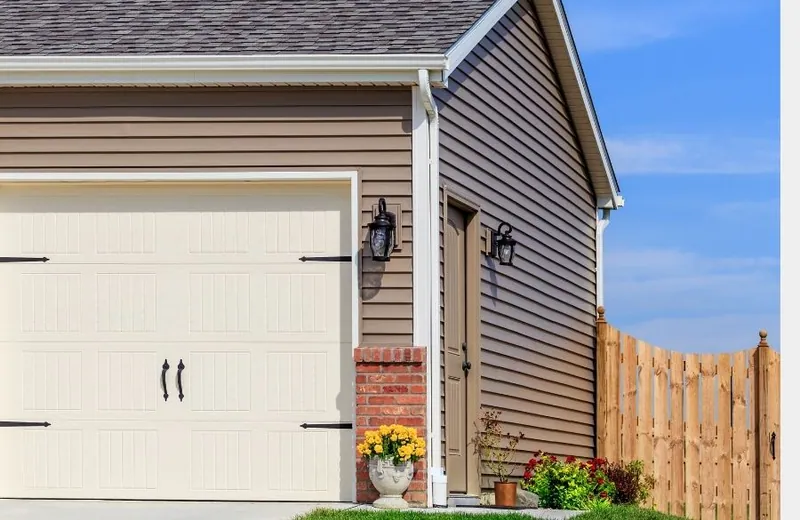
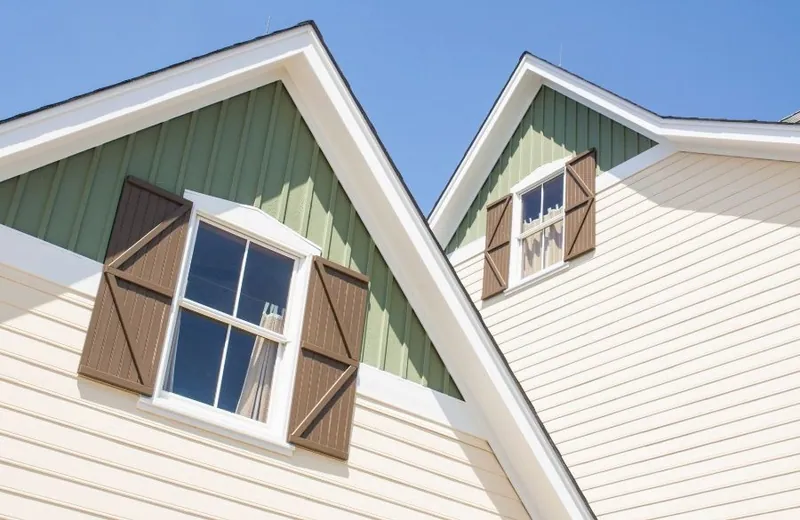
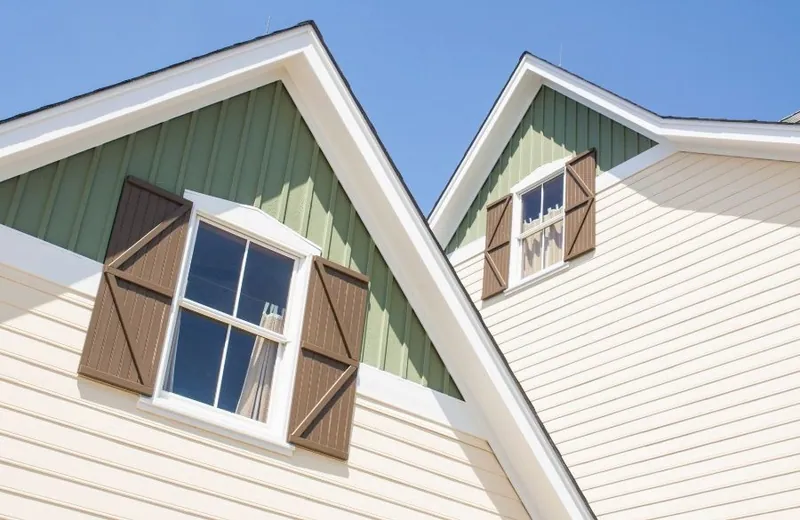
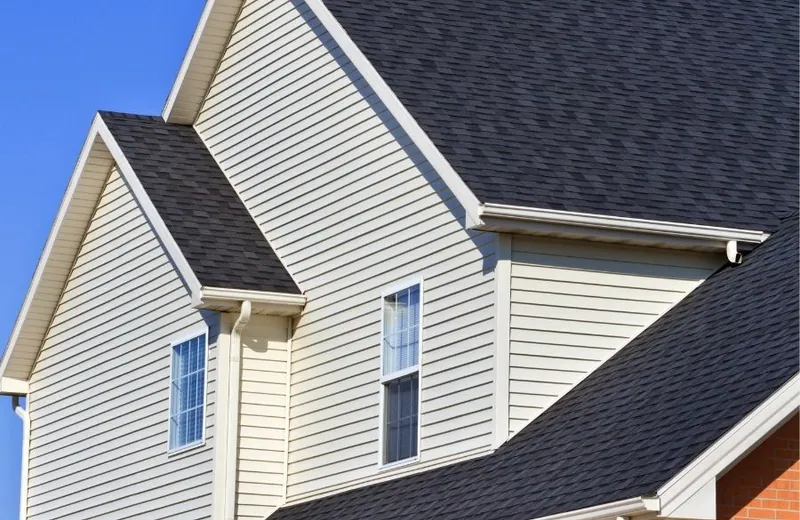
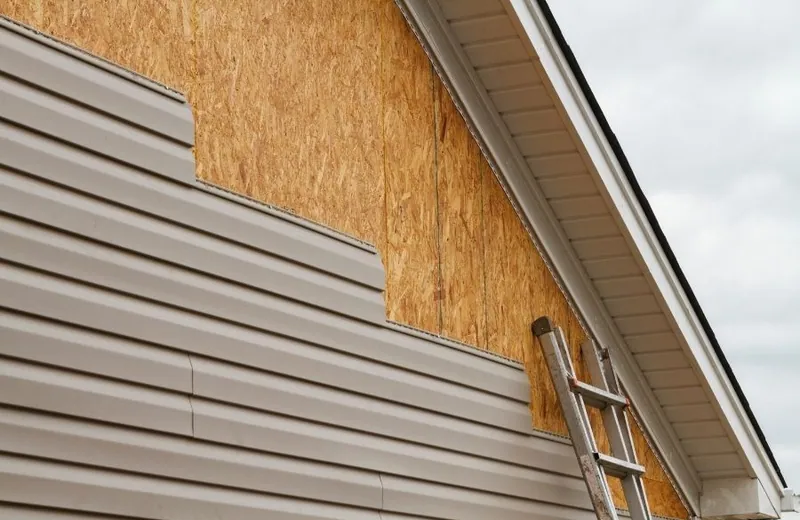
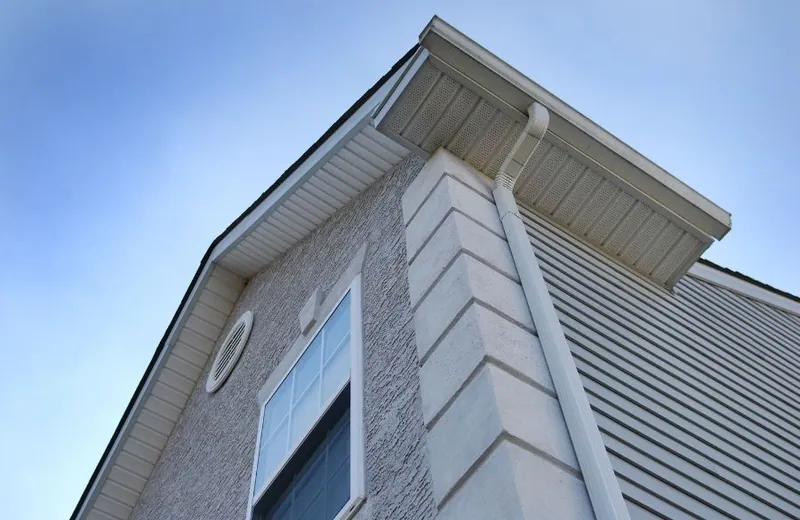
Siding FAQs for Moore Homeowners
How much does it cost to replace siding on a house in Moore?
Most Moore projects fall somewhere between about $8,000 and $30,000. Where yours lands depends on the material and how much of the house is actually sided. A brick ranch that only needs vinyl on the gables and back wall sits at the lower end. Fully residing a home with fiber cement, especially one with rotted hardboard and damaged sheathing, sits at the upper end. Vinyl typically runs about $4–$8 per square foot installed, engineered wood about $7–$12 and fiber cement about $8–$14. You'll get a written, line-item estimate after we inspect the home. Financing is available.
Will my homeowners insurance pay for hail-damaged siding?
Often, yes. If hail cracked, punctured or dented your siding, it's usually a covered peril, minus your deductible. The hard part is documentation and matching. We photograph the damage, write down what we find and can meet your adjuster on site. If your vinyl color or profile has been discontinued, we'll explain why repairing just a few panels would leave a visible patchwork. Under Oklahoma law, contractors can't pay or rebate your deductible or act as your public adjuster, so be careful with anyone who offers to.
How long does a siding replacement take?
The installation itself usually takes about 3–7 working days for a typical Moore home. Small repairs can be done in a day. Before that, allow time for the insurance process, permits and material ordering, which often adds 1–3 weeks. Big projects with lots of sheathing repair, asbestos testing or historic-district review take longer. Storm season matters too. After a major April–June hail event, demand across the metro creates backlogs, so getting an inspection early helps. We give you a written schedule and update you if weather changes it.
Do I need a permit to replace siding in Moore, OK?
In most cases, yes. The City of Moore requires building permits for most exterior remodeling, including residing and replacing structural sheathing, and its Building Inspections office inspects the work. Norman, Oklahoma City, Midwest City and the other nearby cities each have their own permit process. If you're in a historic district like Heritage Hills or Norman's Miller district, material changes need design review first. HOAs in newer subdivisions may also need to approve your colors and materials. We pull the permits and help with the HOA paperwork.
What siding holds up best to Oklahoma hail?
No siding is hail-proof, but some products handle it much better than others. Fiber cement (such as James Hardie) and engineered wood (such as LP SmartSide) resist hail impact well and won't warp in summer heat. Steel siding is very tough, but large hail can still dent it. If you want vinyl, thicker-gauge or insulated vinyl holds up noticeably better than thin builder-grade panels, which get brittle with age and in cold weather. The best choice depends on your budget, your HOA rules and how long you plan to stay in the home.
How can I prevent siding damage between storms?
Start with a walk around the house each spring and after every major storm. Look for cracks, loose courses and gaps at brick-to-siding transitions. Keep sprinklers from spraying the walls, and make sure the soil slopes away from the foundation so red clay doesn't splash up onto the bottom courses. Repaint hardboard or wood before the paint fails, re-caulk joints that have opened up and trim back branches that rub against the siding. Clean gutters prevent overflow that soaks the fascia. Catching small problems early keeps them from turning into rot.
When should I repair siding instead of replacing it?
Repair makes sense when the damage is limited to a few areas, the siding is otherwise in good shape and you can still get matching panels. Replacement makes more sense when the damage covers whole walls, the color has been discontinued, the hardboard is swelling or rotting in several places or the siding is brittle 1990s vinyl that cracks in every storm. Missing siding, exposed house wrap or wind damage at the eaves needs attention right away, because Moore's spring storms tend to come in clusters and the next rain can soak the sheathing.
How do I avoid storm-chaser contractors after a hailstorm?
Before you sign anything, confirm the contractor has a local presence, ask for proof of bonding and insurance and make sure they'll pull a permit. Be wary of anyone who offers to cover your deductible, which is illegal in Oklahoma, or who pressures you to sign that same day. Under the Oklahoma Home Solicitation Sales Act, you have 3 days to cancel a contract signed through door-to-door solicitation. Some cities also require door-to-door solicitors to carry a permit. Moore Siding & Exteriors is local, bonded and insured, and we'll still be around after storm season ends.
Serving Moore, OK & Nearby
Get Your Moore Siding Inspection Scheduled Today
Whether last night's hail cracked your vinyl or your 1980s hardboard is finally giving out, get a clear look at the damage and a written plan from a local, bonded and insured siding crew.
- ✓Thorough exterior inspection with photo documentation
- ✓Help with your insurance claim and adjuster meeting
- ✓Written, line-item estimate with no surprise add-ons
- ✓Impact-resistant material options suited to Oklahoma weather
- ✓Permits pulled and inspections coordinated
- ✓Written project timeline and daily site cleanup
- ✓Financing available for qualified projects
⚡ Siding or soffit torn off by wind? Call us right away. Exposed walls should be dried in before the next storm.
Bonded • Insured